Property1313 Team · October 26, 2026 · 16 min read
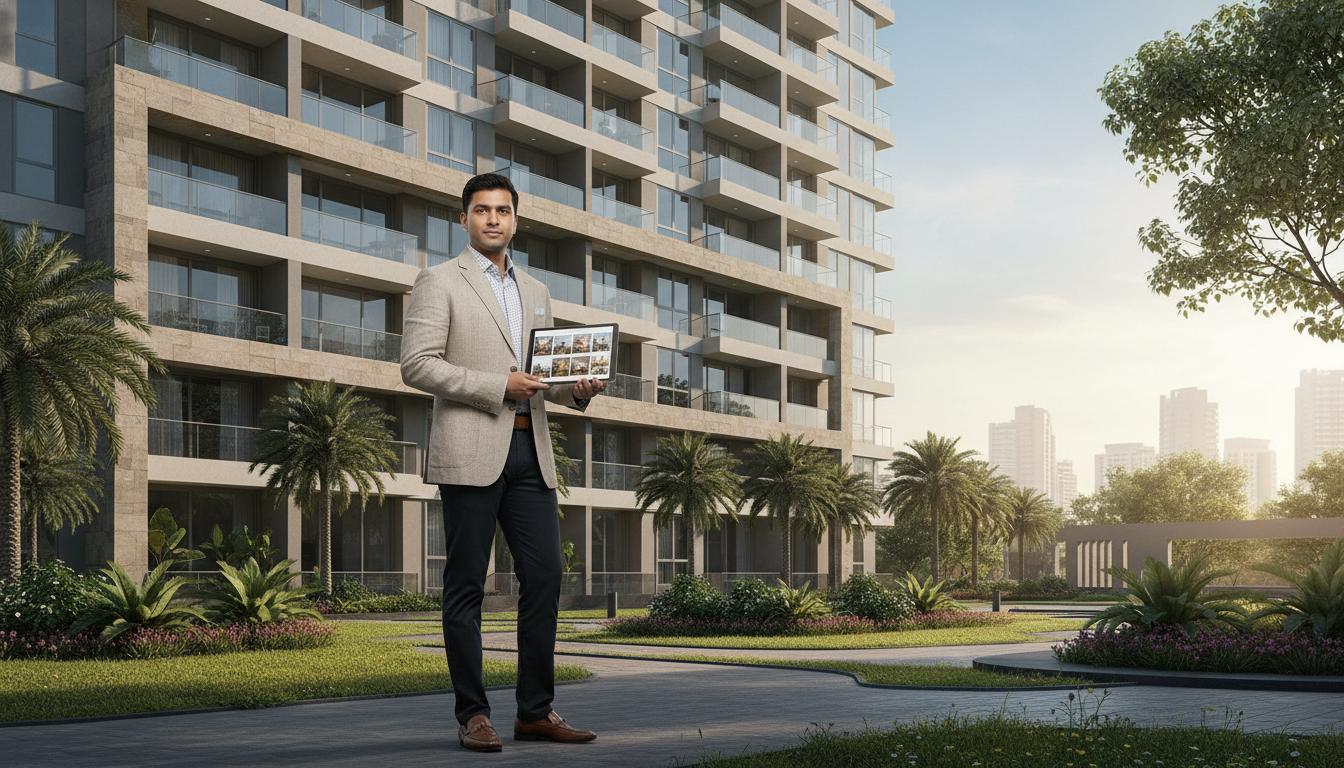
This NRI property buying guide is for Indians abroad who want a flat, a house, a plot or a shop in Mohali, Zirakpur, New Chandigarh or Chandigarh, without flying home for every step. It covers what the law lets you buy, how to pay, the loan, the power of attorney, the paperwork and what happens to tax and repatriation when you sell one day.
Quick answer: As of October 2026, an NRI or an OCI cardholder can buy residential or commercial property anywhere in the Tricity without RBI permission. You cannot buy agricultural land, a farmhouse or plantation property. Pay from abroad through a bank, or from your NRE, FCNR(B) or NRO account, and sign in person or through a registered power of attorney.
Everything below is taken from the rules themselves: the RBI's Master Directions under FEMA, the Income-tax Act, the Ministry of External Affairs and the registration law that Punjab's sub-registrars apply. Where a rule changed recently, we say so and give the date. Our older post on buying property in the Tricity as an NRI looks at areas; this guide is about the process.
Who counts as an NRI or OCI for buying property
Two laws decide your status, and they do not use the same test.
- For buying and selling property, FEMA applies. A "non-resident Indian" is an Indian citizen who is resident outside India, for example someone who has gone abroad for work or to settle. An OCI is a foreign citizen registered as an Overseas Citizen of India cardholder.
- For tax, the Income-tax Act applies, and it counts days spent in India in a year. You can be an NRI for FEMA and still be a resident for tax in a particular year, or the other way round. Your chartered accountant should settle your tax status each year.
If you have taken British, Canadian or another citizenship and do not hold an OCI card, the permission described below does not cover you. Apply for the OCI card first, or speak to a lawyer before you pay any booking amount.
What NRIs and OCIs can and cannot buy under FEMA
The RBI's Master Direction on acquisition or transfer of immovable property under FEMA (Master Direction No. 12, last updated 1 September 2022) sets this out. It rests on the Foreign Exchange Management (Non-debt Instruments) Rules, 2019.
| How you get it | Allowed for an NRI or OCI? | The condition |
|---|
| Purchase of a flat, house, builder floor or residential plot | Yes | Paid through banking channels |
| Purchase of a shop, office, SCO or showroom | Yes | Paid through banking channels |
| Agricultural land, plantation property or a farmhouse | No | Not open to purchase by NRIs or OCIs |
| Gift of a residential or commercial property | Yes | From a person resident in India, or from an NRI or OCI who is a relative as defined in section 2(77) of the Companies Act, 2013 |
| Inheritance | Yes | From a person who held it lawfully |
| Joint purchase with a foreign-national spouse | One property | The marriage must be registered and have lasted at least two years before the purchase |
What this means on the ground in the Tricity: a flat in a RERA-registered project, a GMADA plot, a plot in a licensed colony or a showroom on Airport Road is fine. A "farmhouse" or an acre of land outside the planned sectors is a different matter. Around Mohali, Zirakpur and New Chandigarh, some land on offer is still recorded as agricultural.
What to check: for any plot or house outside a licensed project, ask for the land's change of land use (CLU) or the colony licence, and check the project on the RERA Punjab portal. If the land is still agricultural on record, an NRI cannot buy it, whatever the seller says.
NRE, NRO and FCNR(B): which account pays for what
The RBI's Master Direction on deposits and accounts (updated 2 September 2026) defines the three accounts. All three can be used to pay for property.
| Account | Currency | Money can go back abroad? | Typical use in a purchase |
|---|
| NRE (Non-Resident External) | Indian rupees | Yes, freely | Your foreign earnings sent to India; the cleanest source for a purchase you may later want to repatriate |
| FCNR(B) | Foreign currency, fixed deposits only | Yes | Savings kept in dollars, pounds or dirhams until the payment is due |
| NRO (Non-Resident Ordinary) | Indian rupees | Only up to USD 1 million per financial year | Money earned or received in India, such as a pension, a fixed deposit opened before you left, or a past sale |
The RBI direction notes that interest on NRE balances is exempt from Indian income tax. NRO interest is taxable in India.
How to pay for the property
The rule is short. Under paragraph 3.3 of Master Direction No. 12, you must pay from money received in India through banking channels, or by debit to your NRE, FCNR(B) or NRO account. Traveller's cheques, foreign currency notes or any other route are not allowed.
In practice, for a new flat in Mohali or Zirakpur:
- Book from your Indian account, never in cash. Pay only into the project bank account named in your allotment letter and agreement, never into a personal account.
- Keep the bank's inward remittance advice or certificate (FIRC) for every transfer from abroad. These papers are what let you repatriate the money one day.
- If the price is ₹50 lakh or more, you as the buyer deduct 1% TDS from each payment to a resident seller or builder and deposit it on the income-tax portal. This was section 194-IA of the old Act; from 1 April 2026 the Income-tax Act, 2025 carries the same rule under a new section number.
- An under-construction flat attracts GST; a completed one with a completion or occupation certificate does not. GST does not change because you are an NRI.
- Pay instalments only on the stages written in your agreement. Our guide to construction linked and down payment plans explains how the stages work.
Home loans for NRIs
NRIs and OCIs can borrow in India for a home. Section 4 of the RBI's Master Direction on borrowing and lending (updated 8 September 2026) allows a bank, or a housing finance company approved by the National Housing Bank, to lend to an NRI or a person of Indian origin to buy a residential home in India. The main conditions:
- The loan amount, margin money and repayment period are on par with loans to residents.
- The loan is secured by a mortgage of the property being bought.
- The loan cannot be credited to your NRE or FCNR(B) account. It is paid to the seller or builder.
- EMIs can come from a remittance from abroad, from your NRE, FCNR(B) or NRO account, or from a relative in India paying directly into the loan account.
The cap on how much of the price a bank may lend is the same as for residents. Under the RBI's housing finance norms, it is up to 90% for loans up to ₹30 lakh, 80% above ₹30 lakh and up to ₹75 lakh, and 75% above ₹75 lakh. Stamp duty and registration are not counted in the price for this purpose, except on homes of up to ₹10 lakh. So on most Tricity flats you should plan to pay at least 20–25% plus stamp duty yourself.
Note: this RBI route covers a home. For a plot or a commercial unit, ask your bank first; lending terms there are the bank's own.
Banks usually ask an NRI borrower for a passport and visa or residence permit, an overseas employment contract or business papers, recent salary slips, overseas bank statements and the property documents. Each bank has its own list. Work out the monthly payment for your budget on our EMI calculator, and see our home loan guide for Punjab buyers.
Power of attorney: when you cannot be there
You can sign the sale deed yourself on a trip home. Many buyers instead give a power of attorney (POA) to a parent, a sibling or another trusted person in India.
- Make it a special POA for one named property and named acts: signing the agreement, paying from a named account, appearing before the sub-registrar, taking possession. A broad general POA gives away far more than a purchase needs.
- Under section 33 of the Registration Act, 1908, a POA signed by a principal who lives outside India is accepted for registration when it is executed before and authenticated by a notary public, a court, judge or magistrate, or an Indian consul or vice-consul.
- How you authenticate it depends on your country. India has been a member of the Hague Apostille Convention since 2005, and the Ministry of External Affairs says a document apostilled by a member country needs no further attestation in India. In a country outside the Convention, the POA is attested at the Indian embassy or consulate instead.
- Once the POA reaches India, it has to be stamped. Under section 18 of the Indian Stamp Act, 1899, an instrument executed only outside India may be stamped within three months after it is first received in India. In Punjab, your attorney takes it to the district's stamp authority for this, and then registers it if the transaction needs a registered POA.
| Where you live | Apostille Convention member? | Usual route for a POA |
|---|
| United Kingdom | Yes | Notary, then an apostille from the FCDO Legalisation Office; UK guide |
| Canada | Yes, since 11 January 2024 | Notary, then an apostille from Global Affairs Canada or the province's designated authority; Canada guide |
| UAE | No, on the HCCH status table we checked in October 2026 | Attestation at the Embassy of India, Abu Dhabi or the Consulate General of India, Dubai; UAE guide |
Tip: before you sign anything abroad, send a draft to the person who will use it and ask them to show it to the sub-registrar's office or your lawyer in Mohali. Offices sometimes prefer particular wording, and fixing it before you sign saves a second trip to the notary.
Remote and video site visits
You cannot walk a site from London, Toronto or Dubai, but a live video call gets you close. What to ask for on the call:
- A live walk, not a recorded video. Ask to start at the project gate and walk to the tower, so you see the approach road and the neighbours.
- The actual tower and floor, not only the sample flat. Ask what stage the slab work has reached, then compare it with the quarterly progress the builder files with RERA. Our guide on how to check RERA registration in Punjab shows where to find it.
- The view from the unit's side of the building, the sun direction at the time of the call, and the distance to the main road.
- For a ready flat: water pressure, lift, power backup, parking and the condition of common areas. Our possession and handover checklist lists what to test.
- The documents on screen: RERA certificate, approved layout and, for a ready building, the occupation or completion certificate.
Want to see a project on a live video call? WhatsApp Property1313 on 89100 01313 with the projects or the budget you have in mind. We will walk the site with you on your time zone, share the price sheet and RERA papers, and answer your family's questions on the same call. You can also browse project videos first.
NRI property buying guide: the documents you will need
| Stage | Documents |
|---|
| Booking | Passport (and OCI card if you are a foreign citizen), PAN, overseas address proof, photographs, cheque or transfer from your NRE/NRO/FCNR(B) account |
| Bank and payments | KYC for the NRE/NRO account, inward remittance advice or FIRC for every transfer from abroad, TDS challans if the price is ₹50 lakh or more |
| Home loan | Passport and visa or residence permit, overseas income proof, overseas bank statements, the allotment letter or agreement, the builder's approvals |
| Registration | Agreement for sale, sale deed or conveyance deed, PAN of buyer and seller, ID of the person appearing, the stamped and registered POA if someone signs for you, photographs and two witnesses |
| Keep for selling later | All payment proofs, bank certificates showing the source of funds, the registered deed and possession letter |
The PAN matters more than buyers expect. Banks, the builder and the sub-registrar all ask for it, and you need it to deduct TDS and to file a return when you sell. Our property documents checklist covers the seller's side.
Registering the deed in Mohali, Zirakpur and New Chandigarh
Mohali, Zirakpur, Kharar and most of New Chandigarh fall in Punjab, so the deed is registered at a Punjab sub-registrar office. Under section 32A of the Registration Act, the buyer and seller, or the attorney appearing for one of them, give photographs and fingerprints at registration. That is why either you or your attorney must be physically present.
Punjab has been changing its registration process. On 26 May 2025, the Punjab government launched an "Easy Registry" system at the Mohali sub-registrar office, with online submission of documents, pre-scrutiny and appointment slots (as reported in the press on 26 May 2025); later reports describe it being extended across the state. Ask your lawyer or our team what the office currently asks for before your attorney goes.
Chandigarh is a Union Territory and Panchkula is in Haryana. Each has its own registration office, stamp duty and procedure. For Punjab rates, read our guide to stamp duty and registration charges in Punjab, and the registration guide for the steps.
When you sell: TDS, capital gains tax and repatriation
TDS when an NRI sells
When you sell, the buyer must deduct tax at source before paying you. Under the old Act this was section 195; from 1 April 2026 the Income-tax Act, 2025 carries it under a new section number. Unlike the 1% that resident sellers face, TDS for a non-resident seller is worked out at the capital gains rate, and the buyer needs a TAN to deduct and deposit it.
- Long-term gains (property held for more than 24 months) are taxed at 12.5% plus surcharge and cess, the rate that applies from 23 July 2024.
- Short-term gains (24 months or less) are taxed at your slab rate.
- Without anything else, buyers often deduct on the full sale price, which can lock up far more than the tax you actually owe. You can apply to the Assessing Officer for a lower deduction certificate (section 197 of the old Act; the 2025 Act carries it under a new number) so the TDS reflects the real gain.
- You then file an Indian return and claim any excess back.
If you live in a country with a tax treaty with India, the treaty may also matter. The Income Tax Department publishes India's tax treaties.
Taking the money back abroad
Paragraph 8 of Master Direction No. 12 lets an NRI or OCI repatriate sale proceeds if:
- the property was acquired lawfully under the foreign exchange rules of the time;
- the purchase was paid in foreign exchange through banking channels or from NRE or FCNR(B) funds. Home loan EMIs paid from abroad or from NRE/FCNR(B) count as foreign exchange paid;
- for residential property, it is not more than two properties.
Money that does not fit those conditions, for example a property bought from NRO funds or an inherited home, goes through the NRO account. Under the RBI's Deposits and Accounts direction, NRIs and persons of Indian origin may remit up to USD 1 million per financial year from NRO balances, including sale proceeds, under the Foreign Exchange Management (Remittance of Assets) Regulations, 2016. This is a separate facility from the Liberalised Remittance Scheme (LRS), which is for residents. Remittances of this kind need a declaration (the old Form 15CA) and, in most cases, a chartered accountant's certificate (the old Form 15CB). Both have new form numbers under the Income-tax Act, 2025; your bank will tell you which to file.
Important: keep every payment record from the day you book. Ten years later, the bank deciding your repatriation will ask how the money came in, and the remittance advice is the answer.
Country guides
The rules above are the same wherever you live. What changes from country to country is how you authenticate documents, how money moves and what your home country's tax office expects:
Ready-to-move homes NRI families often ask us about
A finished home is easier to judge from abroad. You can see it on video, check its occupation certificate and plan registration on one trip. Four examples from our listings:
The Medallion · GHS Site 4 & 5, IT City, Sector 82-A, Airport Road, Mohali
Beverly Golf Avenue · Sector 65, Mohali — adjoining Mohali Golf Range · ₹1.78 Cr onwards
El Spazia · PR-7 International Airport Road, near Maya Garden City, Singhpura (Nagla), Zirakpur · ₹1.99 Cr onwards
Omaxe The Resort · Sector 14, New Chandigarh · ₹94.16 Lakh onwards
If you prefer a new building, check its RERA completion date, as with The Pinnacle in Sector 83 Alpha, Mohali. For a wider view, see all property in Mohali, property in Zirakpur, property in Chandigarh and property in New Chandigarh, or check property rates by area.
Talk to us before you book
Tell us where you live, your budget and who in your family can help in India. Property1313 will shortlist RERA-registered options, set up live video walk-throughs, share price sheets and connect you with the documents a lawyer or CA will want to see. Send your requirement, or call or WhatsApp 89100 01313.
This article is general information, not legal or tax advice. FEMA, tax and registration rules change; check your own case with a chartered accountant and a property lawyer before you pay or sign.
Frequently Asked Questions
- Can an NRI buy property in Mohali or Zirakpur?
- Yes. Under FEMA and the RBI's Master Direction on immovable property, an NRI or OCI cardholder can buy residential or commercial property anywhere in India without RBI permission. The exceptions are agricultural land, plantation property and farmhouses.
- Can an OCI cardholder buy a flat in Chandigarh?
- Yes. OCI cardholders can buy residential and commercial property on the same terms as NRIs. A foreign citizen without an OCI card is not covered by this permission and should get the card or legal advice before booking.
- Can an NRI buy agricultural land or a farmhouse in Punjab?
- No. FEMA does not allow NRIs or OCIs to buy agricultural land, plantation property or a farmhouse. Inheriting such land is a separate matter. Before buying a plot outside a licensed project, check that the land use has been changed from agricultural.
- Which account should an NRI use to pay for property?
- You can pay by inward remittance through a bank or from an NRE, FCNR(B) or NRO account. Paying from abroad or from NRE or FCNR(B) funds keeps the option of repatriating the sale proceeds later. Cash, foreign currency notes and traveller's cheques are not allowed.
- Can NRIs get a home loan in India?
- Yes. Banks and NHB-approved housing finance companies can lend to NRIs for a home on the same terms as residents. Lenders cap the loan at 75–90% of the price depending on the loan size, and EMIs can be paid from abroad or from NRE, FCNR(B) or NRO accounts.
- Do I have to come to India to register the property?
- No. You can give a special power of attorney to someone in India. Signed abroad, it must be notarised and apostilled (or attested at an Indian mission in a non-Apostille country), then stamped within three months of reaching India. Your attorney appears at the sub-registrar for you.
- How much TDS is deducted when an NRI sells property?
- The buyer deducts TDS at the non-resident rate on capital gains: 12.5% plus surcharge and cess for long-term gains on property held over 24 months, and slab rates for short-term gains. A lower deduction certificate from the Assessing Officer can bring TDS in line with your actual gain.
- How much money can an NRI take back abroad after selling?
- Proceeds of up to two residential properties bought with foreign exchange or NRE/FCNR(B) funds can be repatriated. Other money goes through the NRO account, from which NRIs may remit up to USD 1 million per financial year, with the remittance declaration and a CA's certificate (the old Forms 15CA and 15CB, which have new numbers under the 2025 Act — your bank will tell you which forms it needs).
Related Articles

