Property1313 Team · June 8, 2026 · 3 min read
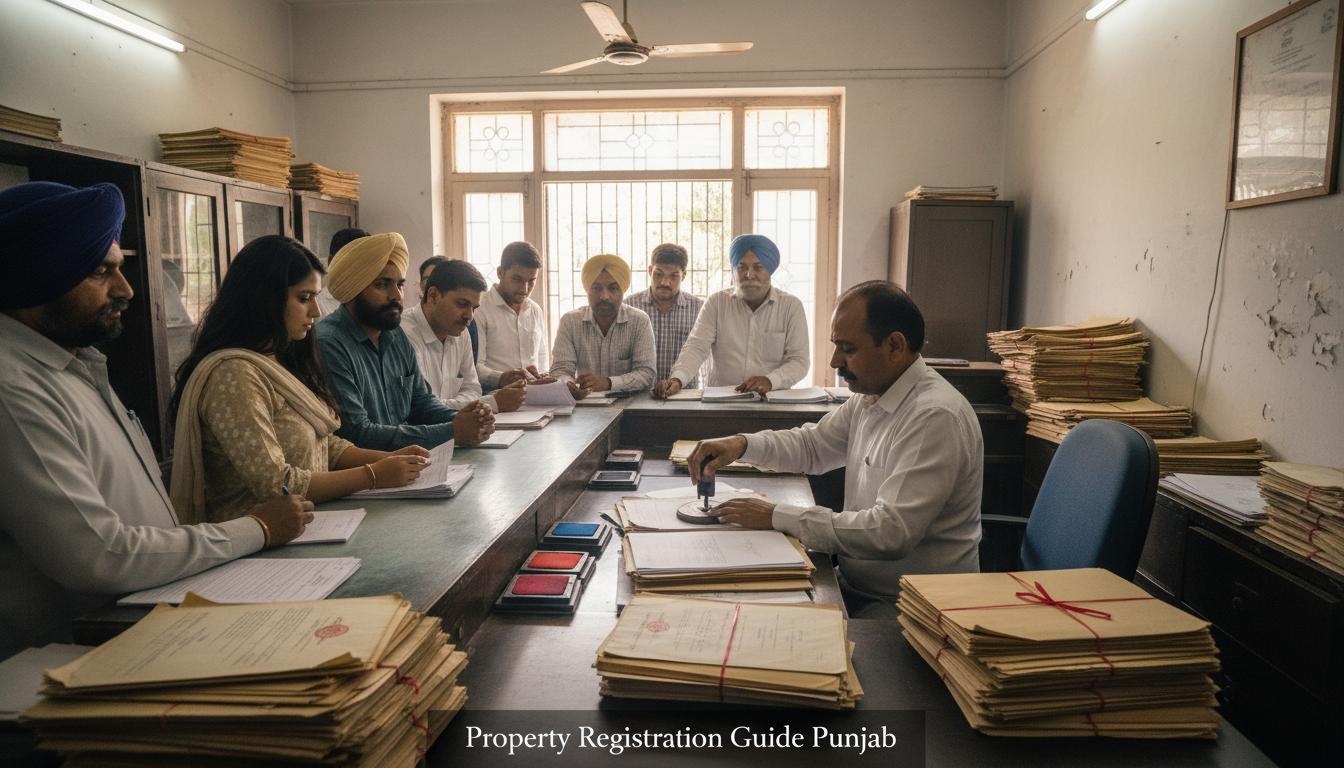
Property registration is the final and most important step in transferring property ownership. In Punjab, much of the registration process is now online, making it more transparent and efficient. This guide covers the complete process.
Step 1: Prepare Documents
Before registration, make sure you have: the Sale Deed (drafted by a lawyer), previous Title Deeds, Encumbrance Certificate, NOCs (if applicable), PAN cards of buyer and seller, Aadhaar cards, passport-size photographs, property tax clearance and the bank loan sanction letter (if applicable).
Step 2: Calculate Stamp Duty and Registration Charges
In Punjab (which covers Zirakpur and Mohali), you pay stamp duty, a registration fee and a social infrastructure cess on the value of the property — the higher of the deal value and the collector rate. The rates are set by the Punjab government, and women buyers and some joint purchases have had a lower stamp duty rate.
Rates and caps change, so take the current figures from the Punjab Revenue Department or the Sub-Registrar office before you buy e-stamps. Our guide to stamp duty and registration charges in Punjab explains how the charges work.
To work out your cost, multiply the property value by the stamp duty rate that applies to you, then add the registration fee and the cess.
Stamp Duty and Registration Charges in Punjab: Complete Guide · Guide on the Property1313 blog
Step 3: Online Appointment Booking
Punjab has moved registration appointments online. Book through the state's registration portal or at the Sub-Registrar office. Select your district (SAS Nagar for Mohali and Zirakpur), choose an available date and time, and pay the fees online where that is offered.
Step 4: Document Execution
On the appointment day: both buyer and seller must be present at the Sub-Registrar office with original ID proofs and photographs, the Sale Deed is executed before the Sub-Registrar, biometric verification is done, stamp duty is paid (if not paid online), and photographs of the parties are taken.
Step 5: Registration
The Sub-Registrar verifies all documents and identities. After verification, the Sale Deed is registered. You receive a registered copy with a unique registration number. If all documents are in order, this usually takes a few hours.
Step 6: Mutation
After registration, apply for mutation of the property records. This transfers the property to your name in government records. Apply at the local Municipal Corporation, Council or revenue office. Mutation usually takes several weeks.
Online Registration
Punjab offers online document preparation and appointment booking. Land records have been digitised and can be viewed at jamabandi.punjab.gov.in. E-stamping is available, so you do not need physical stamp papers.
Timeline
Document preparation: a few days
Appointment booking: a day or two, depending on slots
Registration: 1 day (on appointment)
Mutation: several weeks
Property1313 can help you prepare a checklist for the registry and coordinate with your lawyer, so you know what to bring on the day.
Frequently Asked Questions
- What is stamp duty in Punjab for property registration?
- Punjab charges stamp duty, a registration fee and a social infrastructure cess on the property value, with a lower stamp duty rate for women buyers. Confirm the current rates with the Punjab Revenue Department or the Sub-Registrar office before you buy e-stamps.
- Can I register property online in Punjab?
- Punjab offers online appointment booking, e-stamping and document preparation. However, both parties must be present at the Sub-Registrar office for biometric verification.
- How long does property registration take in Punjab?
- The registration itself usually takes a few hours on the appointment day. Document preparation and booking an appointment can take a week or two, and mutation takes several weeks.
- What documents are needed for registration?
- The Sale Deed, original Title Deed, PAN card, Aadhaar, photographs, property tax clearance, NOCs (if applicable) and bank loan documents. Your lawyer will confirm the full list for your property.
- Is it better to register in a woman's name?
- Punjab has charged women buyers a lower stamp duty rate, so registering in a woman's name, or jointly, can reduce the cost. Check the current concession at the Sub-Registrar office and think about ownership and loan eligibility too, not just the saving.
Related Articles

